
Print a file.
Upload an STL or 3MF in the browser slicer. Choose the material and finish, then see an estimate based on the sliced toolpath before sending the order request.
A printed part, with material and quantity agreed before production.
Print the model you already have, or bring the part that needs to exist. CAD, material selection and production happen in the same workshop.
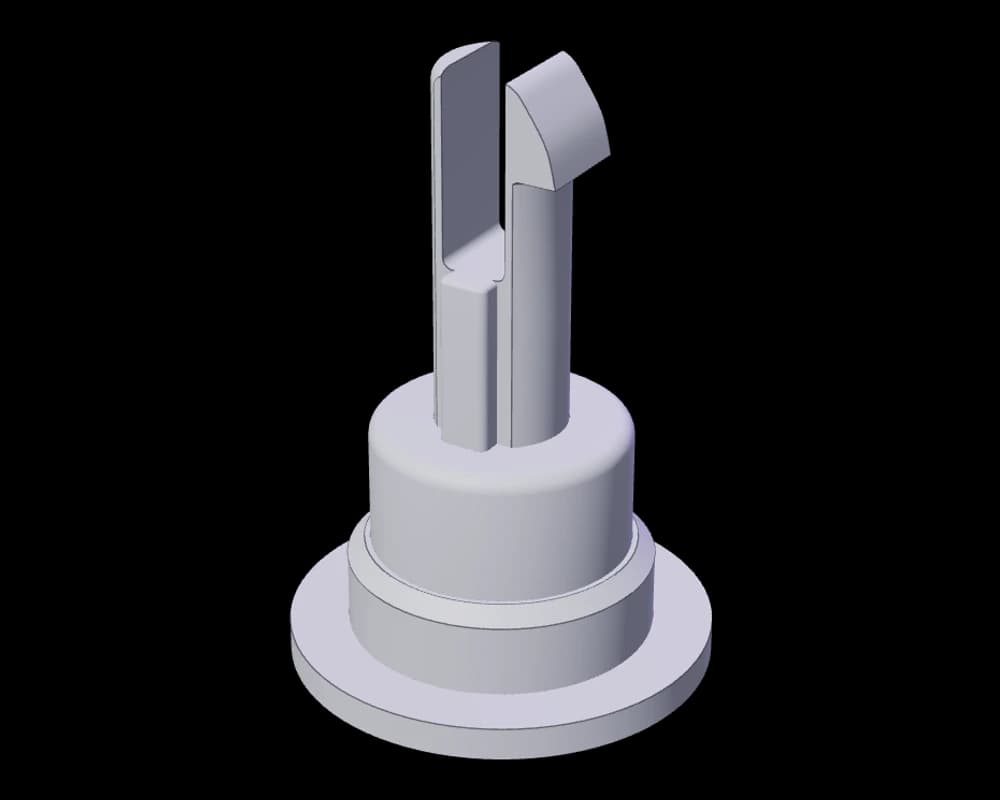
Modeled, sliced, printed
An HVAC actuator replacement. The geometry is real; the build shown here is a visualization.
Custom printing / CAD & modeling / replacement parts / small batches
An actuator replacement has to meet the parts around it. The flange locates it. The shaft transfers motion. The engagement features have to fit. A shape that merely looks right is only the start.
Where the part lives and how it is loaded matter more than a filament's name. These are starting points for the conversation.
Material notes
ASA is a useful option for parts exposed to sunlight and weather. It is also a candidate when the application needs more heat resistance than PLA.
These are general starting points. The final material, print orientation and fit are agreed for your part.
A ready-to-print file and a broken original need different first steps. Both lead to a part you can use.
Upload an STL or 3MF in the browser slicer. Choose the material and finish, then see an estimate based on the sliced toolpath before sending the order request.
Send a sketch, photos with a ruler, dimensions or the original part. We agree the critical features, model it and plan a fit check when needed.
Replacement stock, workshop tooling or a short production run. We establish a first article, then agree quantity, finish and the production plan.
Print-only orders start in the slicer. Modeling work starts with a brief. Production follows your approval.
Use the slicer for STL and 3MF files. If the file does not exist, send photos, measurements and what the part has to do.
We confirm the scope, material, quantity, price and timing. Modeling and fit-check work are quoted separately when needed.
We prepare the print, inspect it and check the dimensions agreed in the brief. Batch work begins with a first article.
Receive the parts and the files included in your quote. Delivery and any assembly or finishing are agreed with the order.
Often. Send photos from several angles, a ruler in the frame and any dimensions you know. We will identify what still needs measuring. A physical original is useful when the fit is difficult to capture in photos.
The slicer estimates printing from a ready model. Modeling, reverse engineering, finishing and assembly are scoped separately. We agree those costs before starting.
PLA, PETG, ASA, ABS and TPU are the regular options. The slicer shows the configured materials and colors. Tell us about heat, sunlight, load and flexibility so we can help choose a suitable plastic.
Send the overall dimensions and quantity. Large parts may need designed joints and assembly; repeated parts need an agreed specification. We assess both before quoting the production plan.
Ready when you are
No file yet? Use “Design with us” to send the problem, a photo or a sketch. You do not need to solve the CAD before getting in touch.