
Jigs & fixtures.
Assembly aids, drill guides, locating fixtures and workshop tooling. Define what must be held, where it must sit and how the operator uses it.
An agreed fixture design and a prototype to check against the real task.
Fixtures that locate a part. Mechanisms that guide a movement. Custom hardware built around the task, with the moving parts considered from the first sketch.
Printed tooling and mechanism prototypes can start through our current design service. Complete machine builds are reviewed selectively as capacity develops.
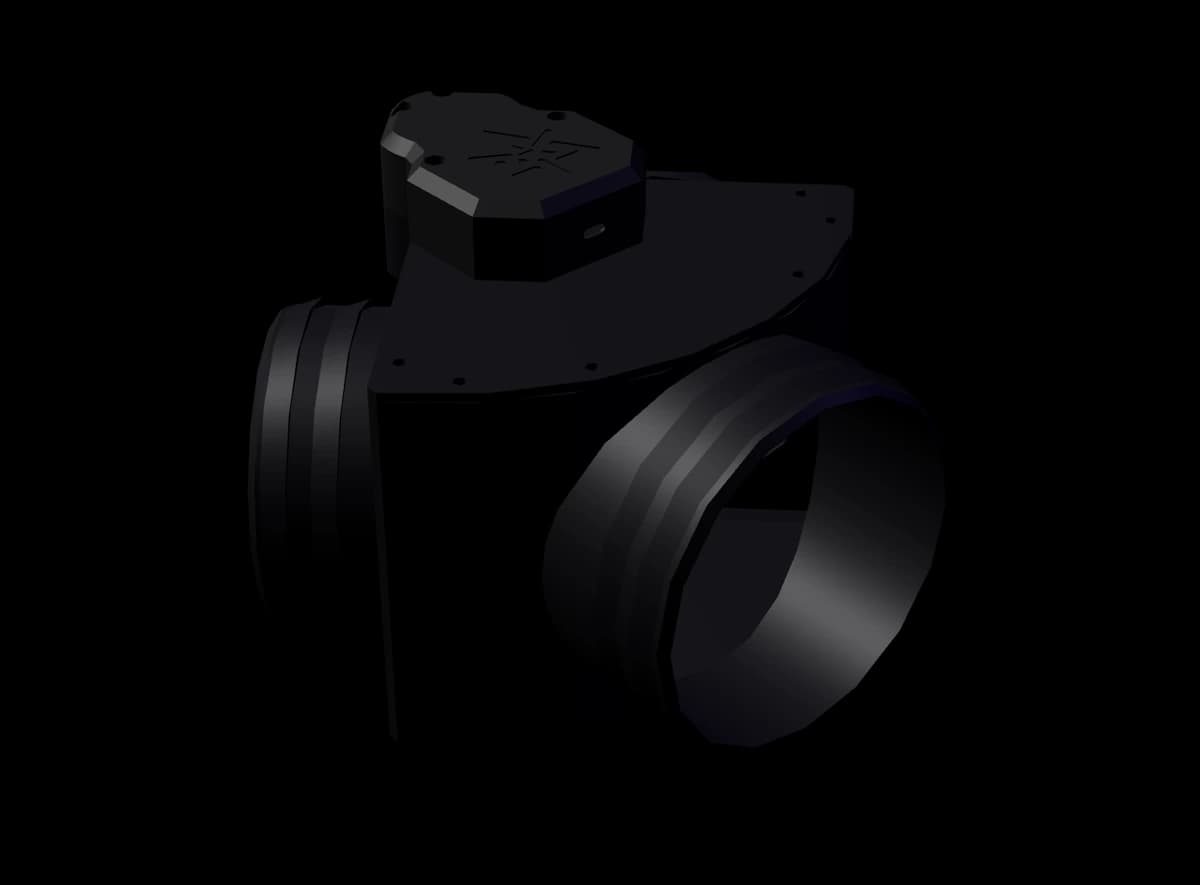
Jigs & fixtures / mechanisms / prototypes / custom machines
The extraction diverter uses a servo-driven flap to direct flow between two branches. The housing, bearings, flap and actuator have to share the same geometry and leave room for assembly.
Small tooling can begin now. Larger mechanisms and complete machines start with a feasibility review and a defined test plan.
Assembly aids, drill guides, locating fixtures and workshop tooling. Define what must be held, where it must sit and how the operator uses it.
Guides, linkages, housings and motion prototypes. We work through the movement, load path and the parts that must be replaceable.
A single-purpose machine or process improvement begins with the operation it must perform. We review feasibility, controls and commissioning before accepting the build.
The operating conditions and acceptance criteria belong in the brief, alongside the geometry.
Photos or a short video of the current operation help. Include the part sizes, movement, expected loads and how often the task repeats.
Review the proposed mechanism, interfaces and the tests that will establish whether it works. Scope larger builds in milestones.
Build the agreed prototype, check it against the task and resolve the fit or motion issues it reveals. Installation is scoped separately when needed.
Printed jigs, fixtures and mechanism prototypes can be scoped through the current printing and design services. Complete machines are considered selectively; we confirm capacity before accepting the project.
Send the task and intended environment first. Machine safety, documentation, commissioning and any conformity requirements need a project-specific assessment. They are agreed before a build is accepted.
Start with the operation
A rough sketch or a video of the current task can explain more than a finished drawing. Include the constraints and we will review the next step.